
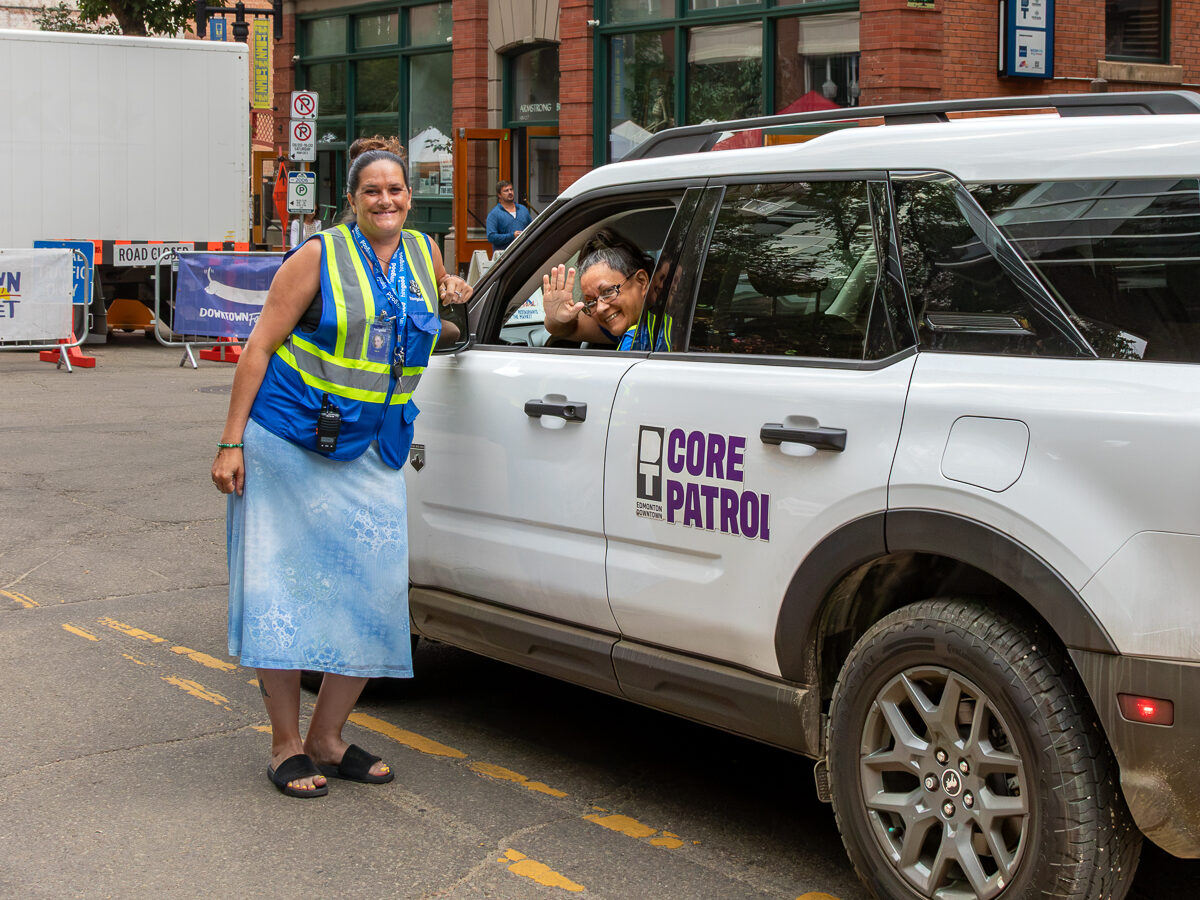
Daytime Core Patrol Shift (7am-3pm)
Daytime shifts conducted a high volume of wellness checks (2386), reflecting the limited availability of daytime spaces for individuals experiencing homelessness to connect, rest, and feel welcome during the day. These interactions provided opportunities to check on individuals’ well-being, offer information about available supports, and connect people with services when appropriate.
Daytime Core Patrol teams reported a higher number (300) of observed property damage (graffiti and vandalism) as increased natural lighting improves visibility and makes damage easier to identify and report.
84% of all daytime reports occurred in front of or behind a business
- Reported insecure properties (buildings/vehicles) to EPS or 311 including holes in the side of buildings, broken windows or doors, evidence of forced entry, broken fencing
- Provided resource referrals and accessibility assistance (wheelchairs or vehicles stuck in snow or potholes)
- Assisted people from unsafe locations (e.g. roadways, parkade entrances)
- Removed hazardous garbage and needles
Nighttime Core Patrol Shift (10pm-6am)
Fire-related incidents occurred more frequently during overnight patrol. These are often associated with individuals attempting to stay warm. Most fires were put out by the community members themselves or Core Patrol (177). If a fire was too large or they suspected dangerous materials were on fire, the team escalated the response to Edmonton Fire Rescue Services (13).
The overnight teams offered 211 referrals more frequently than daytime teams, as fewer support services are available outside regular business hours. In many cases, emergency shelters are the only option available.
88% of all nighttime reports occurred in front of or behind a business
- Assisted intoxicated individuals with safe transportation
- Reported suspected impaired drivers to EPS
- Arranged transportation through 211, when requested
- Reported insecure properties to EPS
- Supported physical assault victims and coordinate with EPS when required
Both shifts responded to active overdoses and to mental health crises and connected to appropriate supports and provided high-visibility patrol to deter unwanted behavior.
What is a Core Patrol Wellness Check?
- Check-in with a community member to confirm they are safe, offer water, provide information about available supports, and connect them to services when appropriate.
- Compassionate, nonjudgmental presence, offering a listening ear and building trusting relationships so community members feel seen, valued, and supported.
Wellness checks do not include medical assessments, outreach case management, or harm reduction supplies (needles and pipes) distribution.